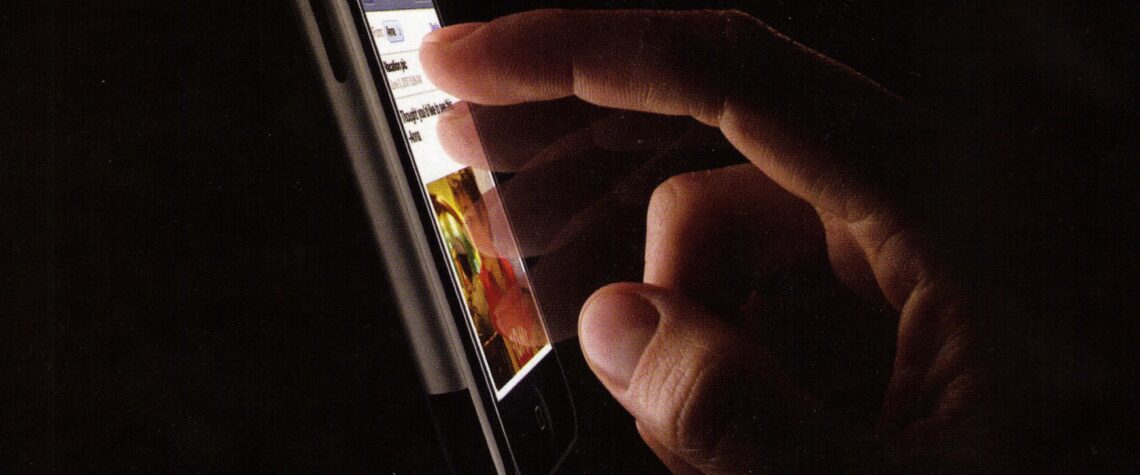
The smartphone is one of the most useful devices ever created. It is also competing for your attention hundreds of times a day. The good news: you can change that relationship without giving up your phone.
The smartphone may be the most successful piece of technology ever invented. It wakes us up in the morning. It tells us where to go. It carries our photographs, messages, credit cards, music, news, maps and increasingly our artificial intelligence assistants. And yet there is something else the smartphone has become remarkably good at doing: Interrupting us.
A message arrives. The screen lights up. Someone liked something. A news alert appears. You pick up the phone to check the weather and, ten minutes later, discover yourself watching a video you never intended to see. What happened? Your attention went somewhere else.
The phone didn’t become distracting by accident
Many apps compete for one of the most valuable resources in modern life: your attention. The longer we remain inside an app, the more opportunities there may be to show us advertising, recommend content, collect signals about what interests us or encourage us to return. That helps explain some familiar features. Notifications. Badges. Auto play. Infinite scrolling. Recommendations. None of these forces you to keep looking at the screen. But together they make stopping surprisingly difficult. And because the phone is always nearby, the invitation never completely disappears.
How many times did you pick it up today?
Try a small experiment. Open the screen-time or digital-wellbeing settings on your phone. Don’t look only at the number of hours. Look for how often you picked up or unlocked the device and which applications demanded most of your attention. The result may be more revealing than the total time. Ten minutes reading an article is not the same experience as ten minutes divided among messages, notifications, social media and email. The problem isn’t simply screen time. It is fragmented attention.
Every interruption has a cost
You’re writing an email. A notification arrives. You check it. Then another message catches your eye. You answer it. When you finally return to the email, you have to reconstruct what you were thinking. That tiny interruption may seem insignificant. But repeat it dozens of times during a day and something changes. We begin living in short bursts of attention. Read… Stop. Check … Return… Scroll… Answer… Return again. Technology gives us extraordinary access to information while simultaneously making sustained attention harder to protect.
You don’t need to throw away your smartphone
The solution is not necessarily a dramatic “digital detox.” For most people, abandoning the smartphone would mean abandoning useful parts of modern life. A better approach is much simpler: Make the phone interrupt you less often.
Start with notifications. Does a shopping app really need permission to interrupt dinner? Does every news organization need to send breaking-news alerts? Do social networks need to announce every reaction? Keep notifications that require your attention—messages from important people, calendar reminders, perhaps banking or security alerts. Turn off the rest. Your phone should notify you because you need to know something, not because an application wants you to return.
Remove temptation from the home screen
The first screen you see when unlocking your phone is valuable territory. Consider removing the applications you open automatically. You don’t have to uninstall them. Simply moving them away from the home screen introduces a tiny moment of friction. And sometimes that moment is enough to ask:
Why am I opening this?
That may be the most important question in our relationship with smartphones.
Try creating phone-free places
Instead of attempting to use your phone less everywhere, choose a few places where you won’t use it at all. The dinner table. The bedroom. A conversation with a friend. The first twenty minutes after waking up. Or perhaps a walk. Small boundaries are easier to maintain than grand declarations about “reducing screen time.” They also remind us that being unreachable for thirty minutes is not a technological failure.
The goal isn’t less technology
Smartphones are extraordinary tools. They can help us navigate an unfamiliar city, speak another language, monitor exercise, photograph our families, manage money and communicate instantly across the planet. The question isn’t whether smartphones are good or bad. It is something more personal: Who decides what you pay attention to—you or the device in your hand?
The smartphone isn’t going away. Neither are notifications, algorithms or applications designed to keep us engaged. But attention is still ours to protect. And sometimes taking it back begins with something remarkably simple: Turn off one notification. Put the phone down. And finish what you were doing.